#7 How Carpathian National Parks Were Expanded by 40,000 Hectares
25 stories of memories for the 25th anniversary of the Frankfurt Zoological Society in Ukraine. We spoke with people who were there at the beginning of the organisation’s work in Ukraine and implemented its first projects together with FZS.
How did a phone call and persistence help a small national park in Zakarpattia join a large-scale conservation project, while years of fighting for every hectare ultimately led to the expansion of Carpathian protected areas by more than 40,000 hectares? Vasyl Mochan, former Deputy Director for Research at Zacharovanyi Krai National Nature Park and now Head of the Protected Area Support Department at FZS, tells the story in this instalment. He recalls years of negotiations with forestry authorities and the journey from an ambitious dream to presidential decrees expanding protected areas.
It all began in 2013. At the time, I was working at Zacharovanyi Krai National Nature Park and wanted to expand it to the boundaries within which it should have been established in the first place.
As soon as I started working there, I told my colleagues that I planned to accomplish three things: restore the hydrological regime of the Chorne Bahno bog, expand the park’s boundaries, and have our beech primeval forests included on the UNESCO World Heritage List. I set myself this goal: once I had completed these three tasks, I could leave the park with peace of mind.
The most difficult challenge turned out to be expanding the institution’s boundaries. Forestry officials resisted.
One day, my colleagues told me that a large project of the Frankfurt Zoological Society, in partnership with the Ukrainian Society for the Protection of Birds, called “Conservation of Carpathian Primeval Forests”, was starting in Yaremche, and that its main task would be to expand national parks. I realised this was my only chance. I found the phone number of Oleksandr Kyseliuk, Deputy Director for Research at Carpathian National Nature Park, who coordinated the process. When I suggested looking for primeval forests in the Irshava area, he was rather sceptical. I insisted:
— Oleksandr Ivanovych, you arrange the meeting, and I’ll find the primeval forests!
That same year, 2013, I came to Mykulychyn for the first time for a working meeting of national parks. The project proposal had already been fully approved by then, and the budget had been divided among eight specific parks. The Head of the Europe Department at FZS, Michael Brombacher, also attended.
After listening to my presentation, he assessed how determined I was and said: “All right, we will include this park in the list of project areas. You will be the ninth”.
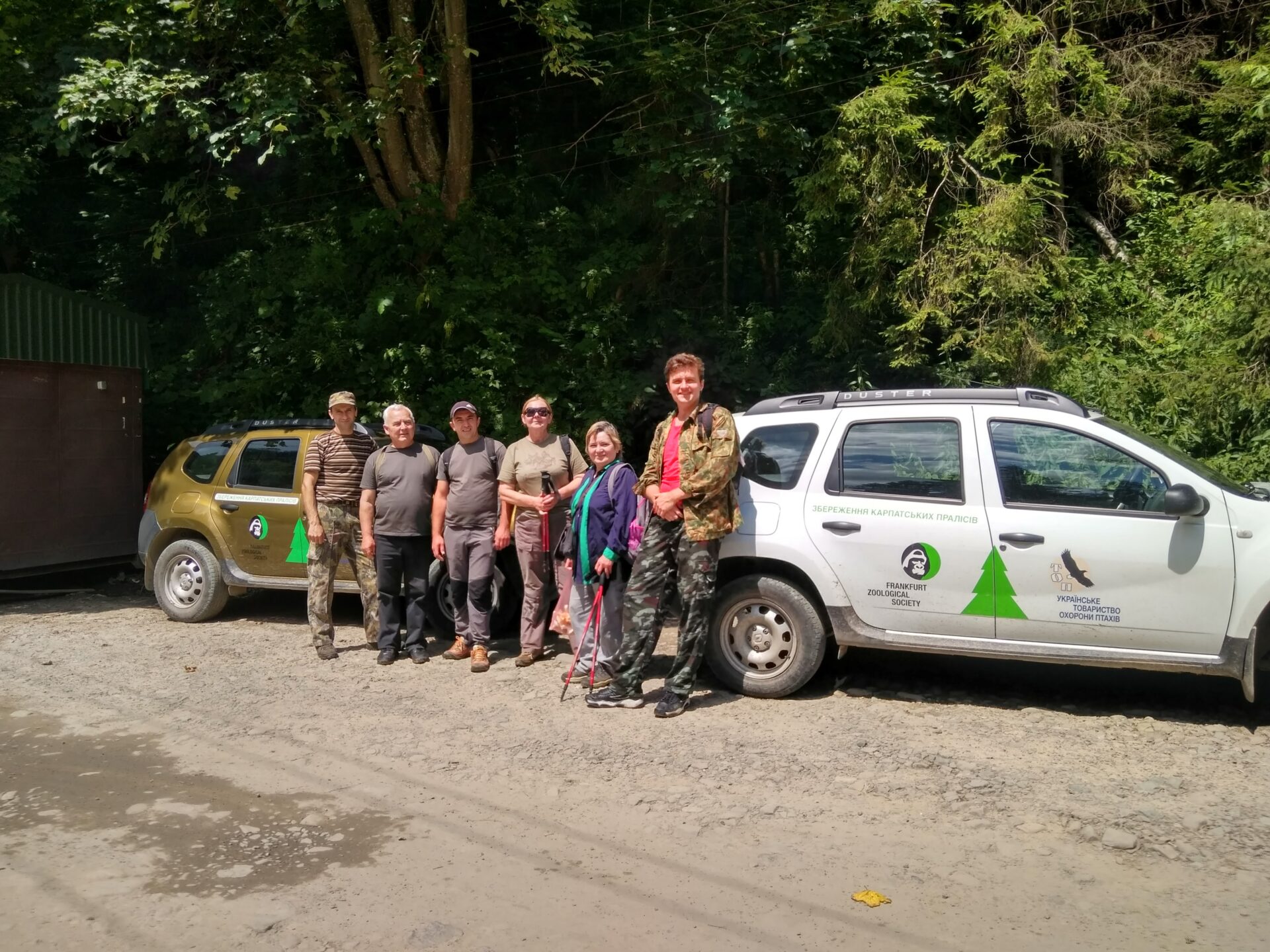
Thanks to the support of the Ukrainian Society for the Protection of Birds and FZS, which provided financial and organisational support for the project, we finally received our first field research equipment: cameras, GPS navigators and binoculars. I remember loading everything into the car while colleagues from other parks joked: “Vasyl, you joined the project last, but you’re leaving with the same set of equipment as us!” At the same time, the parks also received their first Mitsubishi L200 vehicles and quad bikes for protecting the territories.
Our ambitious idea was to expand nine Carpathian institutions by 100,000 hectares.
The list included the following national nature parks: Skolivski Beskydy, Uzhanskyi, Zacharovanyi Krai, Synevyr, Carpathian National Nature Parks, Hutsulshchyna, Cheremoskyi, Verkhovynskyi and Vyzhnytskyi.
We prepared all the scientific justifications, maps and applications. The Institute of Ecology of the Carpathians of the National Academy of Sciences of Ukraine and Lviv Forestry Technical University provided positive expert opinions. In 2015, the entire package of documents was sent to the Ministry of Ecology. And that was where we first hit a wall — obtaining the consent of land users. Since the issue concerned forests, the state forestry enterprises had to approve the transfer. And the foresters did not want to give up the land.
We fought for every patch of land and used every possible connection. It even reached the point where the process was supported not only by the Minister of Ecology but also by the Prime Minister. He later prepared a government directive on expanding protected areas at the local level. We were also strongly supported by Minister of Ecology Ostap Semerak, but the forestry lobby at the local level continued to resist.
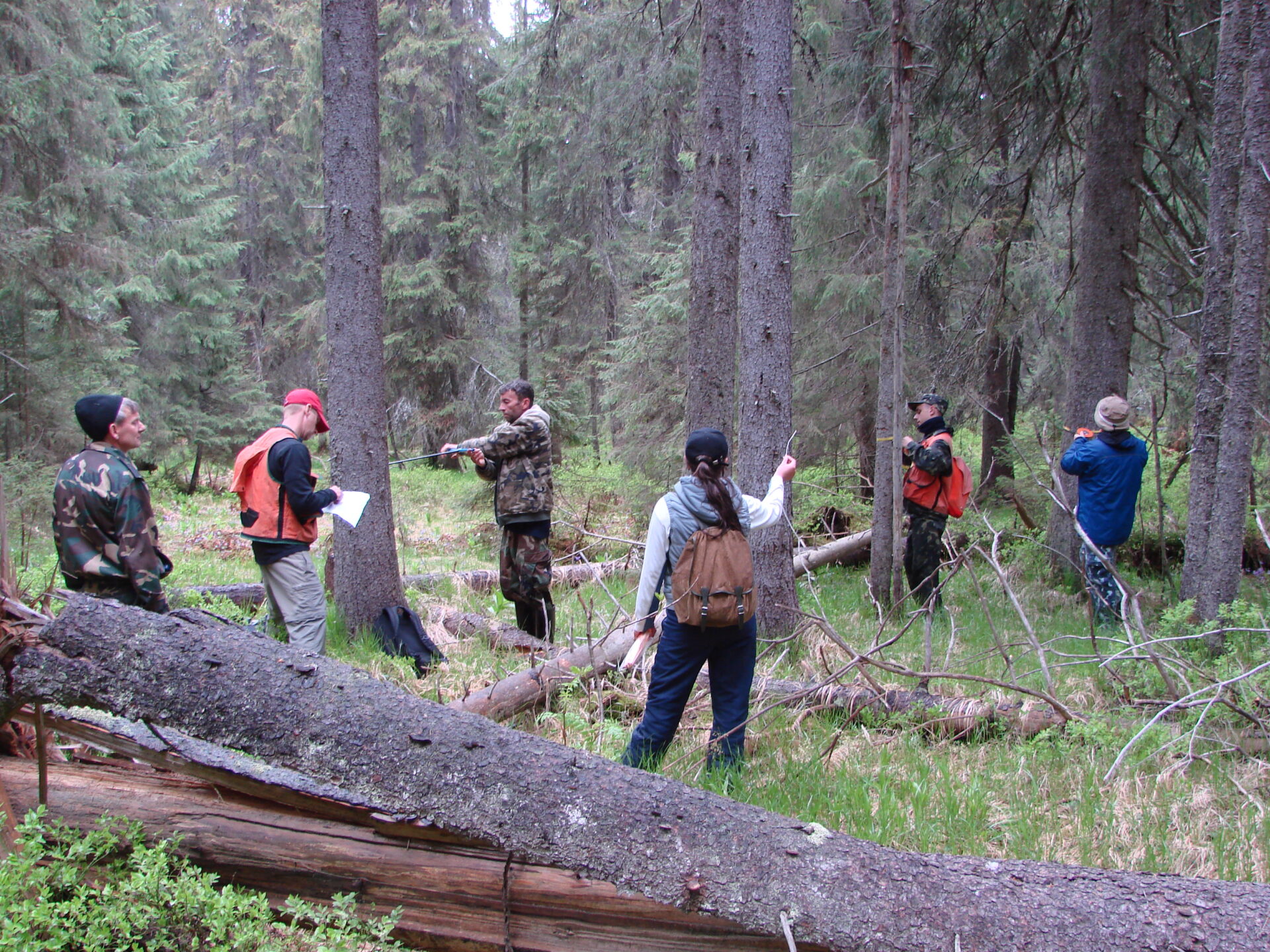
By then, as FZS’s regional coordinator, I was responsible for work in Zakarpattia. Here, we maintained a constructive dialogue with forestry officials and local authorities.
The results of these negotiations varied. In Synevyr, the area was small — only 377 hectares were approved.
In Uzhanskyi Park, there was an almost comical turn of events. The foresters agreed to transfer 12,000 hectares for the park’s permanent use, but issued an ultimatum: “Fine, we’ll give you these primeval forests, but you also have to take another 7,000 hectares of former agroforests.” At first, we and the scientists were outraged, but the Ministry of Ecology was pleased with such a physical increase in the area. As a result, Uzhanskyi expanded by almost 20,000 hectares in total.
In Zacharovanyi Krai, out of the desired 13,400 hectares, we managed to secure 4,300 hectares of the most valuable forest areas. And, according to the forestry officials who were making these decisions at the time, this was only the first stage. They promised there would be more. The next step was to approve the creation of protected forest tracts around Borzhava mountain meadow, covering a total area of more than 1,000 hectares, which would later also be incorporated into the park.
In addition, as part of the related “Support to Nature Protected Areas in Ukraine” (SNPA) project, we prepared similar documents for the Carpathian Biosphere Reserve, expanding it by another 17,000 hectares.
For Verkhovynskyi National Nature Park, we managed to secure 1,695 hectares.
We collected all these approvals in 2017 and sent them to Kyiv to prepare the presidential decrees. The documents then waited in government offices at the Presidential Administration until 2019, when the long-awaited decrees expanding protected areas by more than 40,000 hectares were finally signed.
This is the seventh story for the 25th anniversary of FZS in Ukraine. Read the first stories at the links below:
#1 Prypiat, Goldeneye ducks, and Fish Weirs — How FZS’s Work Began in Ukraine.
#3 Explore all of mountainous Crimea: the project that introduced Ukraine’s vultures to Europe
#5 A Shift Toward the Carpathians: Why FZS Suspended Its Work in Polissia in 2013
#6 Pickups, Uniforms and Management Plans: How Two German Projects Transformed 13 Parks