#6 Pickups, Uniforms and Management Plans: How Two German Projects Transformed 13 Parks
25 stories of memories for the 25th anniversary of the Frankfurt Zoological Society in Ukraine. We spoke with people who were there at the beginning of the organisation’s work in Ukraine and implemented its first projects together with FZS.
How did one person’s enthusiasm bring €14 million to Ukraine, while a grant concept drafted overnight turned into years of support for another five Carpathian institutions? Michael Brombacher, who has headed the Europe Department of FZS since 2011, tells the story in the sixth instalment. We also look at the transformation of the Ukrainian office, when the war became the impetus for bringing two separate teams together into one.
Sometimes the enthusiasm of one person is enough to launch major projects worth tens of millions of euros. Wolfgang Fremuth was that kind of person.
Until 2011, Fremuth headed the Europe Department of the Frankfurt Zoological Society. A great friend and advocate for Ukraine, he made considerable efforts to raise awareness in Germany of the conservation value of Ukrainian landscapes and the changes taking place there.
And the changes were truly significant: since 2000, more than 40 national nature parks had been established in Ukraine. Every president had ambitious plans to expand the protected area network and signed corresponding decrees. During Viktor Yushchenko’s presidency alone, 16 national parks were established, 11 of them through a single decree issued on a single day.
This impressed Fremuth. He realised that FZS support alone was not enough. So he approached the German Federal Ministry for Economic Cooperation and Development directly, which implements international projects through the state-owned development bank KfW.
They replied: “This sounds interesting, but the Ukrainian government must officially request support during intergovernmental negotiations. Only then can the German government provide funding.” And that is what happened.
As a result of the negotiations, €14 million was allocated. This is how the SNPA project (“Support to Nature Protected Areas in Ukraine”), financed by the German government, came into being.
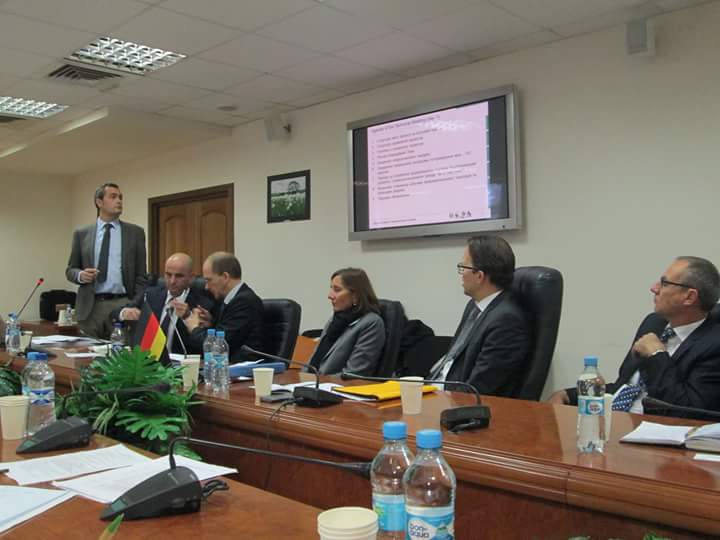
When I joined FZS in 2011, the first phase of the feasibility study began. At that point, it was not yet clear which protected areas should receive support. We were tasked with selecting the “best of the best”, but first we had to determine who they were.
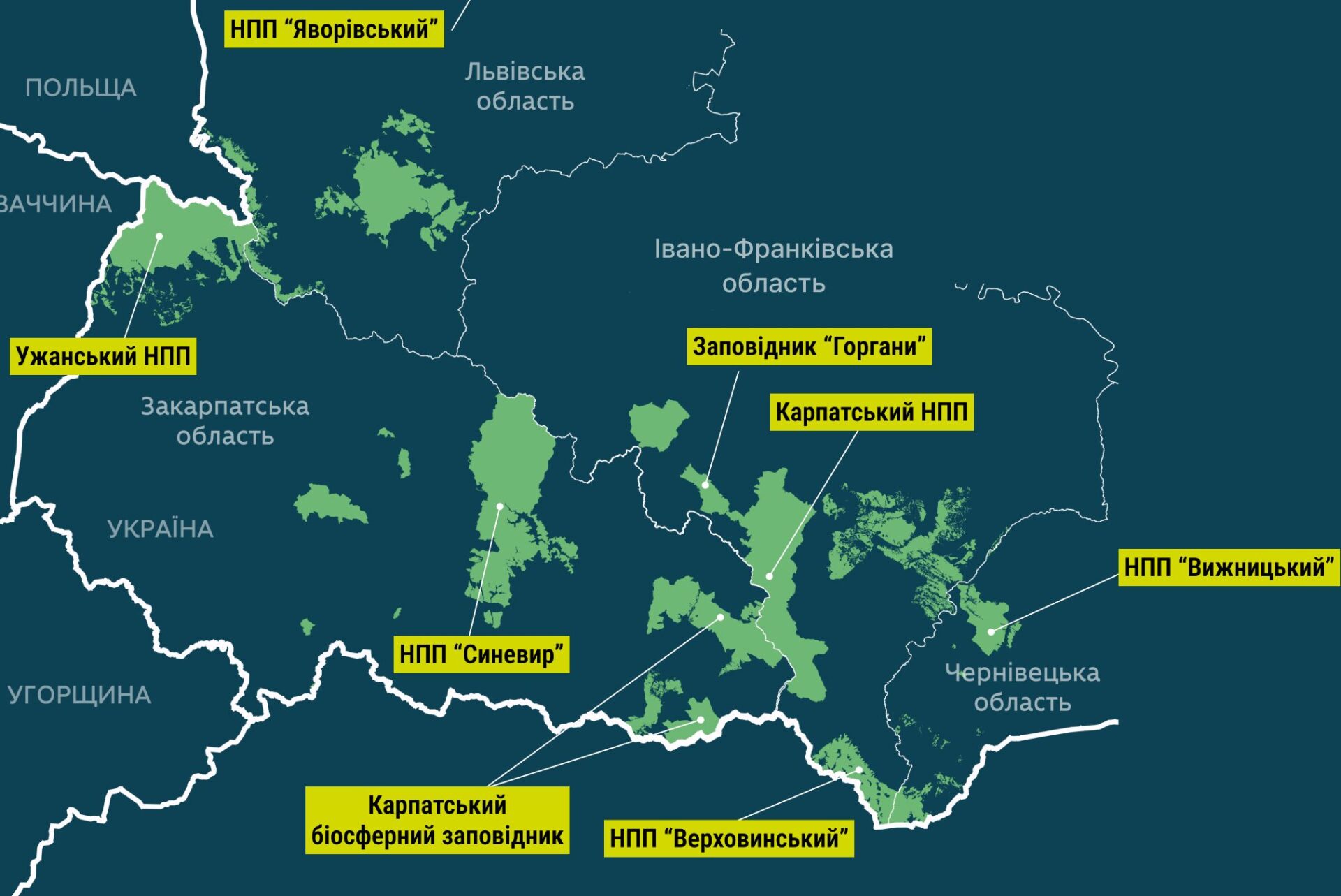
After analysing biodiversity and assessing the degree of naturalness of the territories — another important criterion — nine protected area institutions were selected. Eight of them are located in the Carpathians: Carpathian, Verkhovynskyi, Vyzhnytskyi, Yavorivskyi, Uzhanskyi and Synevyr National Nature Parks, as well as the Carpathian Biosphere Reserve and Gorgany Nature Reserve.
The ninth was Meotyda National Nature Park in Donetsk Oblast. However, in 2014, following the start of the Anti-Terrorist Operation and the occupation of Mariupol by pro-Russian separatists, the park had to be excluded from the list of project participants.
The next step was to determine the needs of each protected area institution.
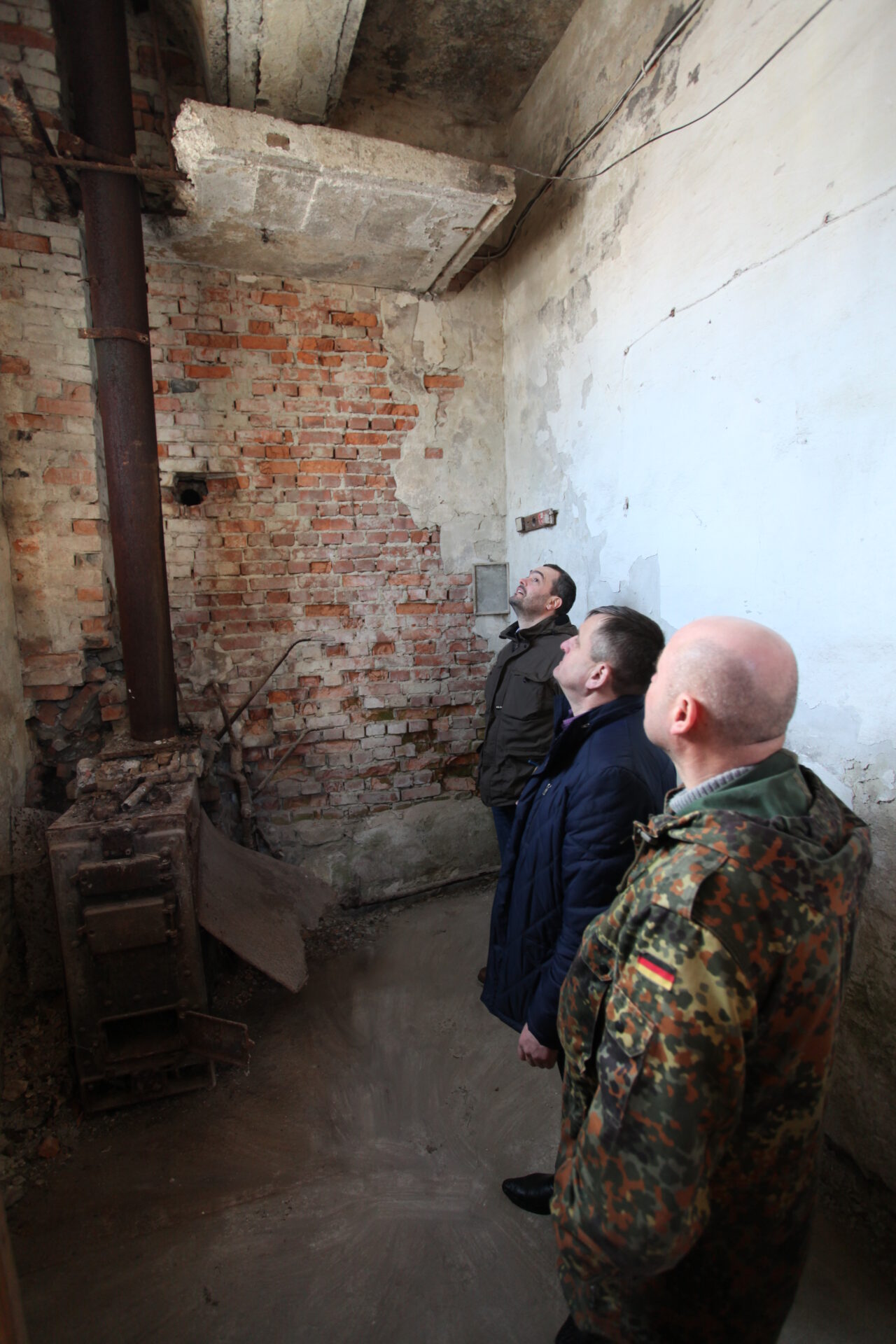
Together with the relevant ministry and the project consortium partners — WWF-Ukraine, the Ukrainian Society for the Protection of Birds (BirdLife Ukraine), and consultants — we assessed the existing infrastructure. It turned out that many parks had virtually no vehicles of their own, proper uniforms, computers or modern communication equipment. The situation was rather bleak.
So the work focused on four main areas. The first was the development of management plans.
These are the basic documents that define an institution’s activities for the next ten years. As part of this work, which has now covered seven parks, the functional zoning of the territories was also reviewed and possible changes were discussed. Importantly, these plans were developed with the participation of local communities and other stakeholders.
The second area was infrastructure and equipment.
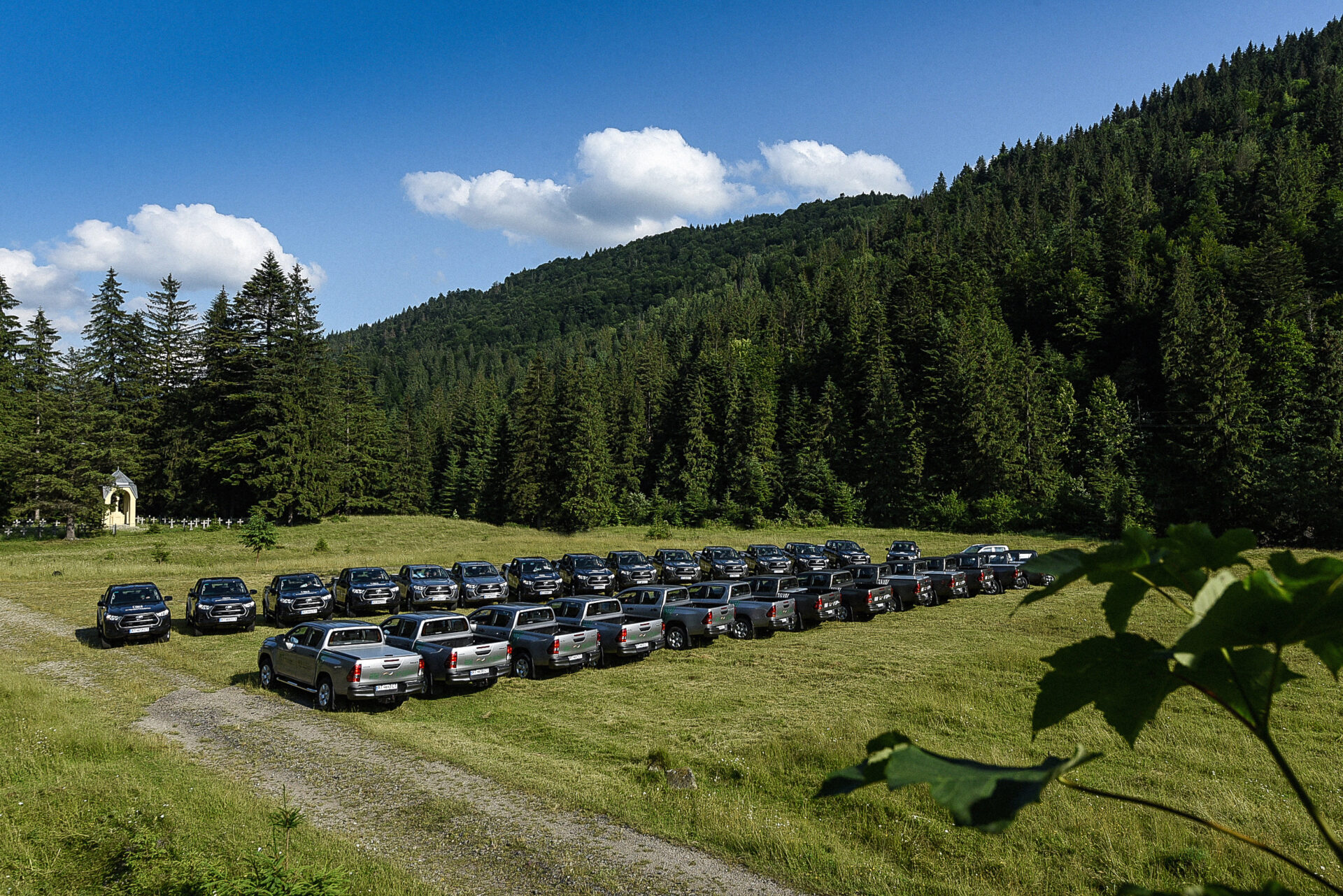
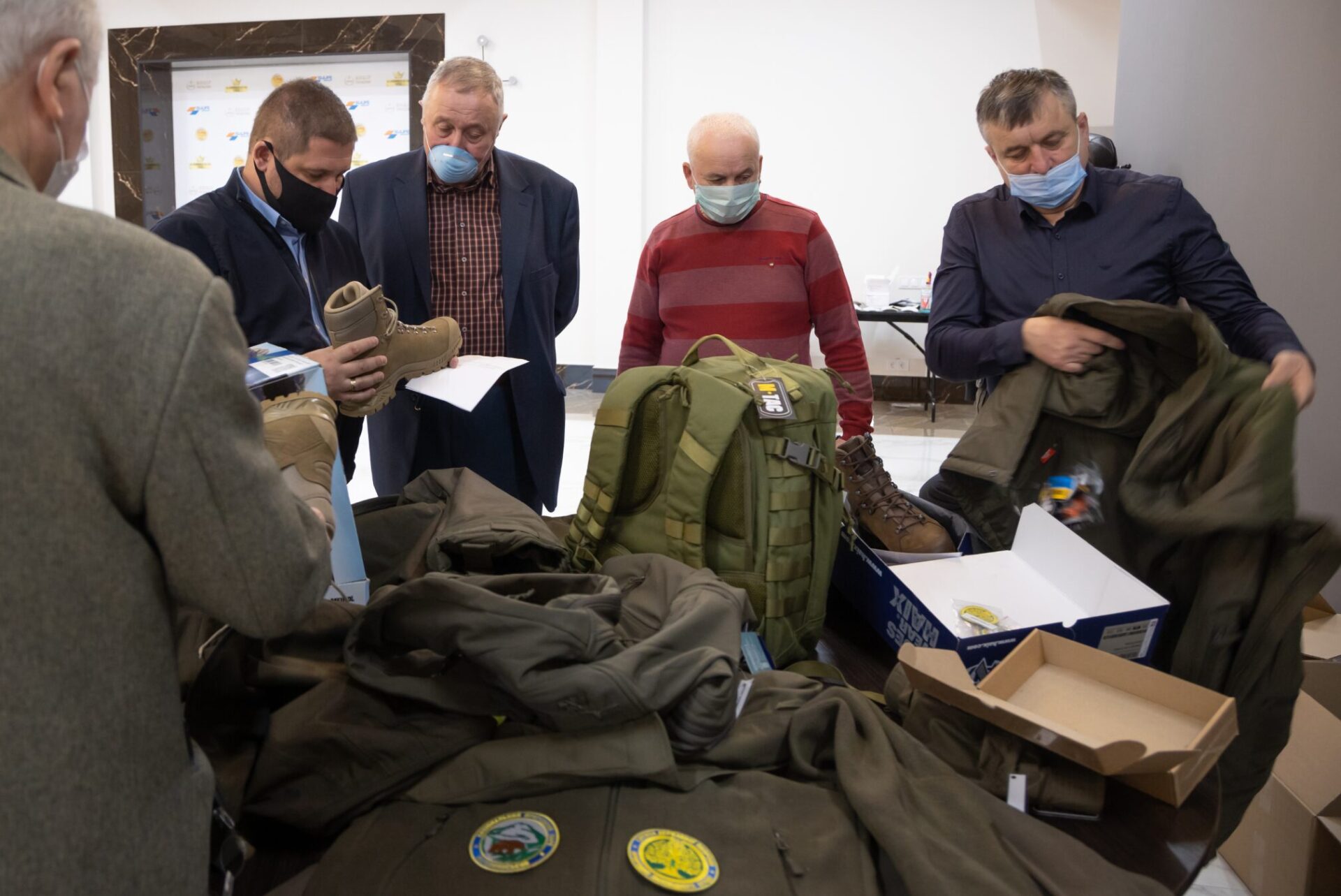
Protected area institutions received 41 Toyota pickups, 10 Renault Duster vehicles, motorcycles, more than 700 sets of uniforms, computers and communication equipment. At the same time, plans were developed for the reconstruction of administrative buildings using environmentally friendly and energy-efficient solutions.
The third area was park branding.
The team developed a unified brandbook for Ukrainian protected area institutions to standardise the appearance of information boards, websites and printed materials. It also included recommendations for staff uniforms, as previously each institution had developed its own design.
The fourth area was work with communities and activities at the national level.
Later, when visiting other Carpathian national parks that were not part of SNPA, I kept having the same thought: the nature here is incredible and the teams are strong; they also deserve support.
One weekend, I sat down and wrote a concept for a new project for the IKI programme, funded by the German Federal Ministry for the Environment. To be honest, I did it almost overnight. The idea was supported.
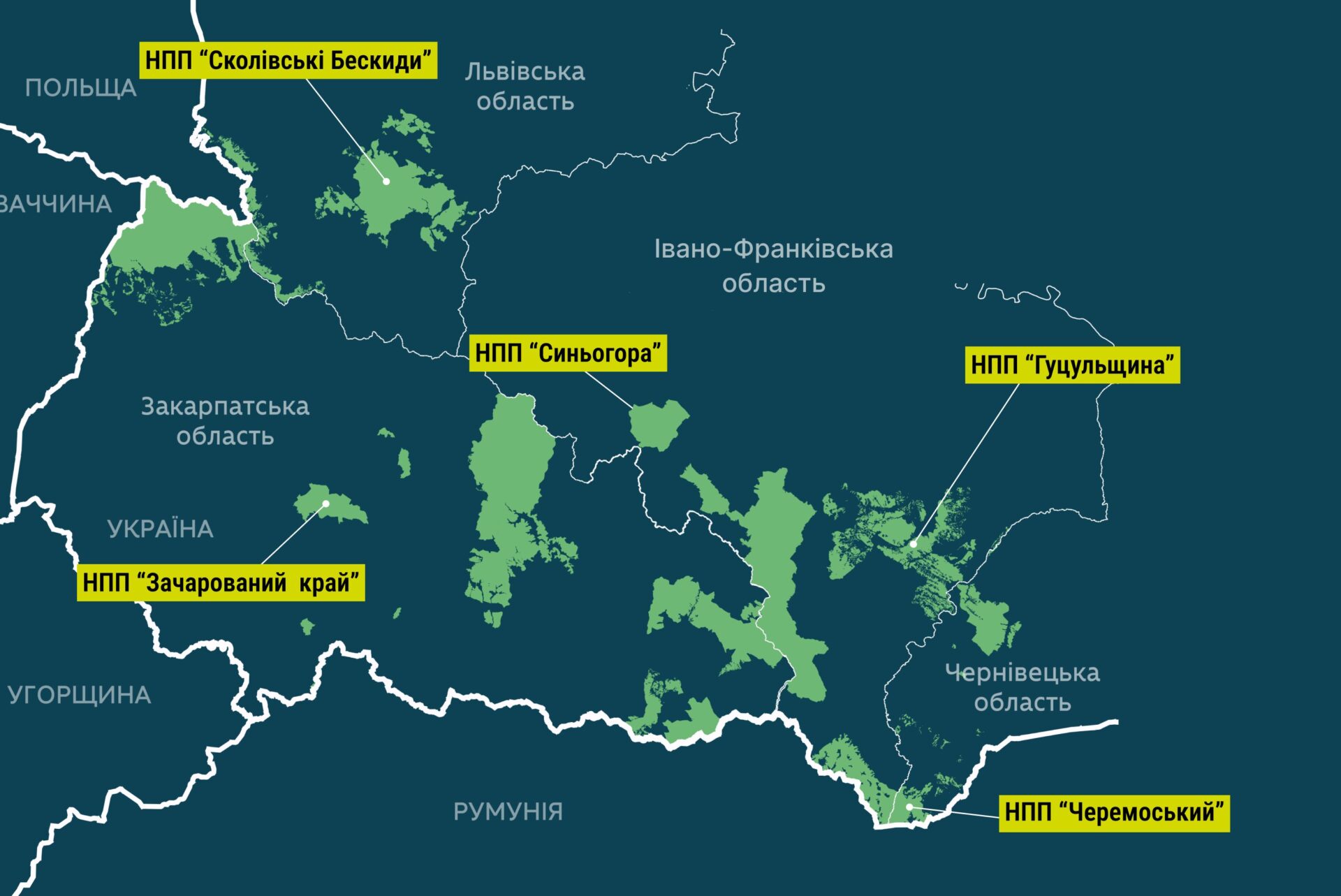
As a result, five more protected area institutions received similar support:
Skolivski Beskydy, Zacharovanyi Krai, Cheremoskyi, Hutsulshchyna and Syniohora National Nature Parks. We were able to purchase the same uniforms for them, vehicles with identical branding, and other necessary equipment.
What made things more difficult was that throughout this time we worked through an intermediary organisation —
the Ukrainian Society for the Protection of Birds, headed at the time by its director Oleh Dudkin. At that point, I did not see the need to register FZS as a separate organisation in Ukraine.
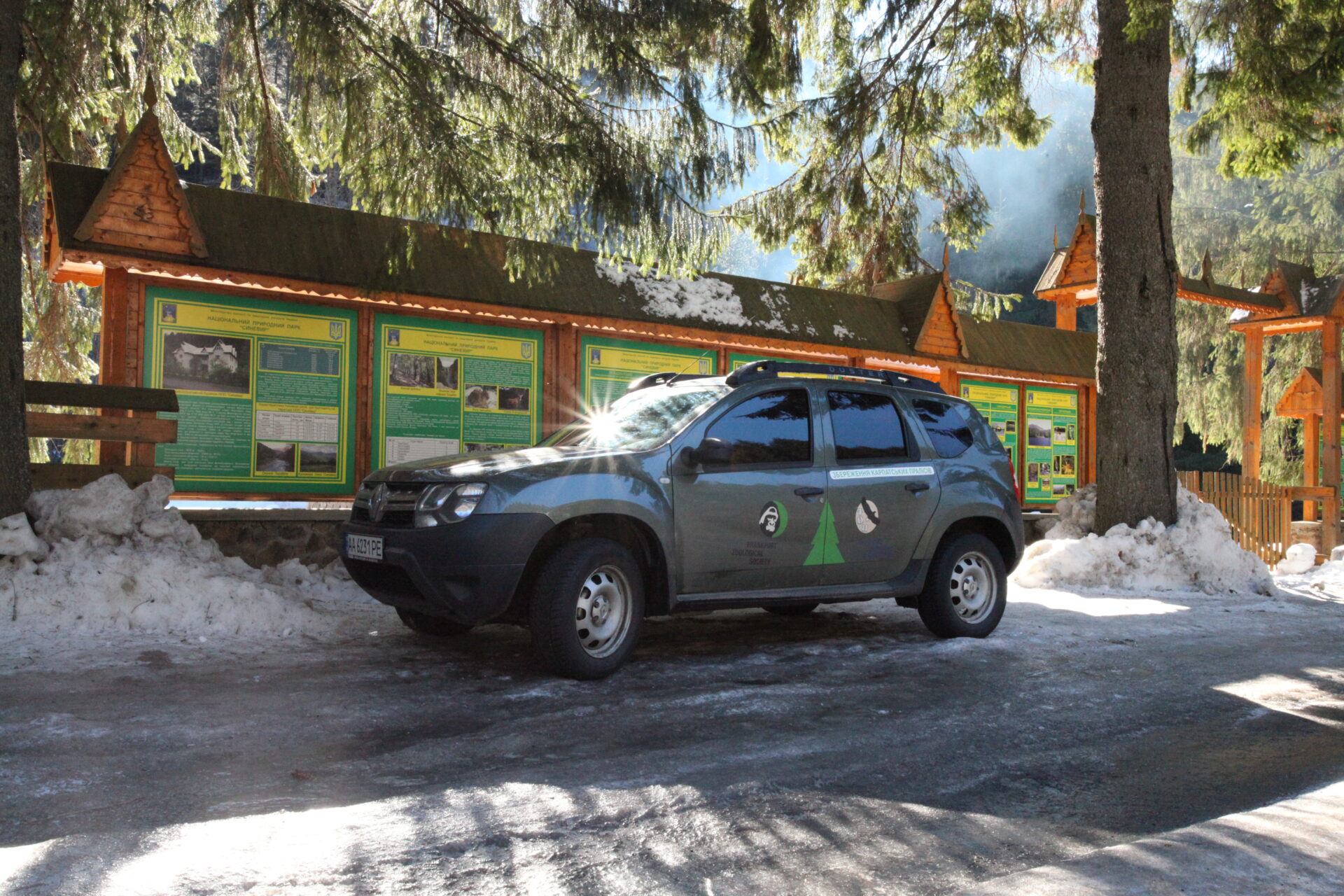
The SNPA and IKI projects had separate teams, worked from different offices, and to some extent even competed with each other. I remember someone complaining about why the other team had received camera traps for its parks first. Frankly, it was not easy.
The war changed everything. I said to myself: “Stop. We have to be one team.”
In the first weeks of the full-scale invasion, we registered the organisation with the Ministry of Justice of Ukraine. National parks were facing new challenges, and we needed our own structure so that we could respond quickly to their needs. Instead of two teams competing with each other, there was now one team working towards a common goal. That is how we continue to work today.
This is the sixth story for the 25th anniversary of FZS in Ukraine. Read the first stories at the links below:
#1 Prypiat, Goldeneye ducks, and Fish Weirs — How FZS’s Work Began in Ukraine.
#2 How the Prypiat River Was Freed from Illegal Fish Weirs.
#3 Explore all of mountainous Crimea: the project that introduced Ukraine’s vultures to Europe
#4 How the Foundation for Bison Research Was Laid in Volyn
#5 A Shift Toward the Carpathians: Why FZS Suspended Its Work in Polissia in 2013